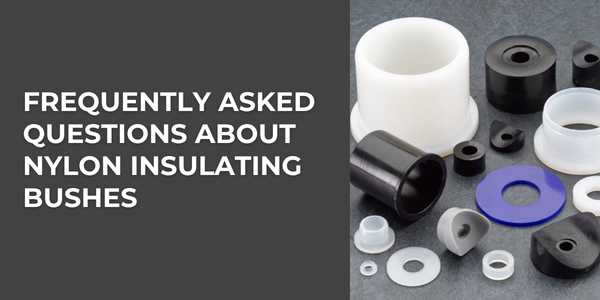
Frequently Asked Questions About Nylon Insulating Bushes
Nylon insulating bushes are small but essential components used across electrical, electronic and mechanical assemblies. Also known as shoulder washers, screw insulators or top hat bushes, they provide electrical insulation, protect components from damage and help create safer, more reliable installations. Below, we’ve answered some of the most common questions about nylon insulating bushes to help you choose the right component for your application.
What is a nylon insulating bush?
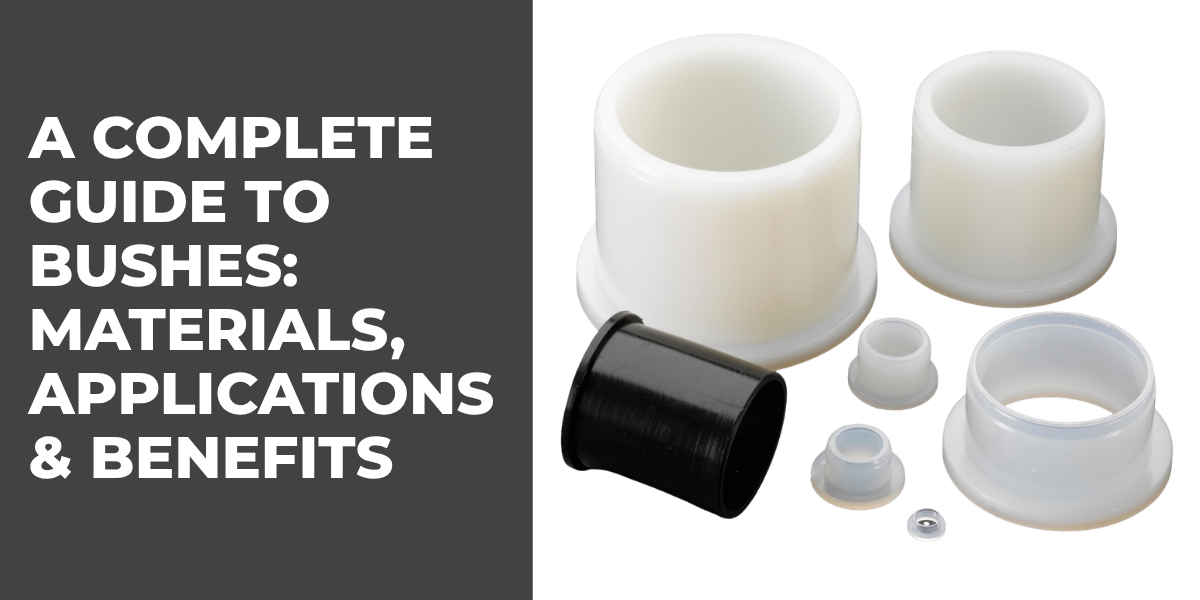
A nylon insulating bush is a precision-moulded plastic component designed to isolate metal fasteners from surrounding materials. Manufactured from electrically non-conductive Nylon 6 (Polyamide), these bushes help prevent electrical current passing through screws, bolts and fixings while also reducing heat transfer and protecting delicate components.
Their distinctive flange gives rise to the name “top hat bush”, while the extended sleeve separates the fastener from the mounting hole.
What are nylon insulating bushes used for?
Nylon insulating bushes are widely used wherever electrical insulation or component protection is required. Typical applications include:
- Printed circuit board (PCB) mounting
- Electrical control panels
- Switchgear and distribution equipment
- Automotive electrical systems
- Battery packs and charging equipment
- Consumer electronics
- Telecommunications equipment
- Industrial machinery
- Instrumentation and control systems
- Renewable energy installations
They are particularly useful when metal screws pass through conductive materials and electrical isolation is required.
Are insulating bushes and shoulder washers the same thing?
Yes. The terms insulating bush, shoulder washer, top hat bush, screw insulator, insulation ring and nylon insulating washer are often used interchangeably. Although the names vary between industries and manufacturers, they generally describe the same style of component. A flanged nylon bush that electrically isolates a fixing from the surrounding material.
Why is Nylon 6 used for insulating bushes?
Nylon 6 is one of the most widely used engineering plastics because it combines excellent mechanical strength with outstanding electrical insulation properties.
Its benefits include:
- Excellent electrical insulation
- High mechanical strength
- Good wear resistance
- Resistance to vibration and repeated movement
- Low moisture absorption compared with many plastics
- Good thermal stability
- Lightweight construction
- Corrosion resistance
These characteristics make Nylon 6 suitable for both electrical and mechanical applications.
Are nylon insulating bushes electrically conductive?
No. Nylon 6 is an excellent electrical insulator and does not conduct electricity under normal operating conditions. This makes nylon insulating bushes ideal for preventing electrical contact between metal fasteners and conductive components, reducing the risk of short circuits and unintended current flow.
Can nylon insulating bushes withstand heat?
Yes. Nylon 6 offers good thermal stability and performs well across a broad range of operating temperatures. While the exact temperature limits depend on the application, Nylon 6 is suitable for many electrical, automotive and industrial environments where moderate heat resistance is required. If your application involves continuous high temperatures or extreme operating conditions, alternative engineering plastics may be more suitable.
Do insulating bushes reduce vibration?
Yes. One of Nylon 6’s advantages is its ability to absorb vibration better than metal components. Using nylon insulating bushes can help reduce noise, minimise wear caused by vibration and extend the life of surrounding components by reducing metal-to-metal contact.
Do insulating bushes prevent corrosion?
Although nylon itself cannot corrode, insulating bushes help reduce galvanic corrosion by separating dissimilar metals. This physical barrier can help prevent electrochemical reactions that may occur when different metals are fastened together in damp or corrosive environments.
How do I choose the correct insulating bush?
Selecting the correct insulating bush depends on several dimensions.
You should consider:
- Internal diameter (ID) – the size of the screw or bolt passing through the bush.
- Outside diameter (OD) – the size of the mounting hole.
- Flange diameter – determines the amount of surface coverage.
- Overall height – the thickness of the material being insulated.
- Flange thickness – additional spacing and protection.
Choosing the correct dimensions ensures proper insulation, secure fastening and reliable long-term performance.
Can insulating bushes be used with all screw types?
In most cases, yes. Nylon insulating bushes are compatible with a wide range of machine screws, self-tapping screws and bolts, provided the internal diameter matches the fastener size. Always check the dimensions before installation to ensure the correct fit.
Are nylon insulating bushes suitable for outdoor use?
Nylon bushes can be used outdoors in many applications, although prolonged exposure to UV radiation, moisture and extreme weather may affect performance over time. For demanding outdoor environments, it is advisable to discuss the application with your supplier to determine the most suitable material.
What industries commonly use insulating bushes?
Nylon insulating bushes are found in many industries, including:
- Electrical manufacturing
- Electronics
- Automotive
- Aerospace
- Renewable energy
- Telecommunications
- Medical equipment
- Industrial automation
- Rail engineering
- General manufacturing
Their versatility makes them one of the most widely used electrical insulation components available.
Why are insulating bushes sometimes called top hat bushes?
The flange and sleeve create a profile that resembles a traditional top hat. This distinctive shape allows the flange to sit against the surface while the sleeve passes through the mounting hole, providing insulation around the entire fastener.
What are the advantages of using nylon instead of metal bushes?
Compared with metal alternatives, nylon insulating bushes offer several advantages:
- Electrically insulating
- Lightweight
- Corrosion resistant
- Cost-effective
- Quiet in operation
- Vibration absorbing
- Easy to install
- Non-magnetic
- Resistant to many oils and chemicals
These properties make nylon the preferred material for many electrical and engineering applications.
Where can I buy high-quality nylon insulating bushes?
At BPF, we provide precision-manufactured Nylon 6 components in a wide range of sizes, along with clear technical specifications and expert product support. Whether you’re sourcing a single replacement part or bulk quantities for production, selecting the correct dimensions and material will ensure reliable performance and long service life.
If you have any questions about our products, our friendly advisors will be here to help you. You can chat with a BPF Online product advisor through our website, or call us on 01295 678614.


 FREE UK carriage on orders over £250 nett
 No minimum order value
 Trade discounts
 Order FREE samples online
 Last cut off for overnight: 3pm