Washers are small but essential components used in countless mechanical and industrial assemblies. While a standard flat washer may look simple, there are many different types of washers available, each designed to perform a specific function. From distributing the load of a fastener to preventing loosening, protecting surfaces and accommodating movement, choosing the right washer can make a significant difference to the performance and reliability of an assembly.
In this guide, we look at some of the most common types of washers, what they do and where they are typically used.
What Is a Washer?
A washer is a component, usually with a central hole, that is fitted between a fastener such as a bolt, screw or nut and the surface of the material being secured. Washers can be manufactured from a range of materials, including plastic, nylon, stainless steel and other metals. The best material and washer type will depend on factors such as the application, load, environment and required level of corrosion resistance.
Although washers are often considered a simple fastening accessory, they can serve several important purposes, including:
- Distributing the load of a fastener over a larger surface area
- Protecting the surface of the material being fastened
- Preventing fasteners from pulling through softer materials
- Reducing the risk of loosening
- Providing spacing or adjustment
- Accommodating movement or vibration
Flat Washers
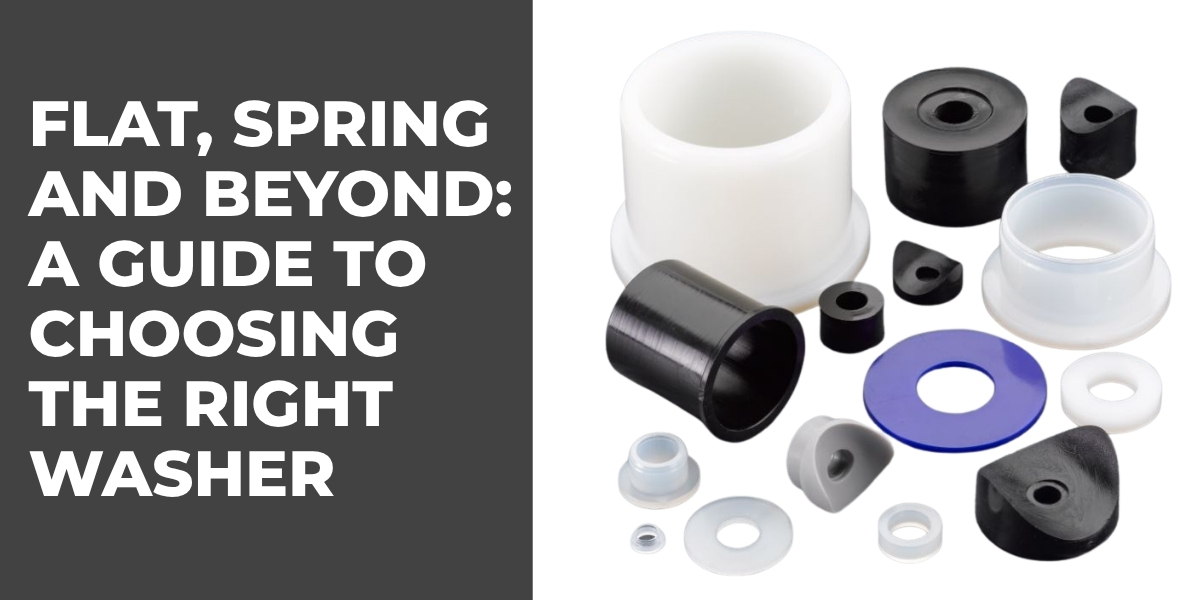
Flat washers are one of the most commonly used types of washer. As the name suggests, they are generally flat and feature a central hole through which the fastener passes. Their primary purpose is to distribute the load of a bolt, screw or nut across a larger area. This can help prevent damage to the surface of the material, particularly when fastening into softer materials. Flat washers are widely used across engineering, manufacturing, furniture, construction and general assembly applications.
They are available in different outside diameters, thicknesses, materials and internal diameters, making it important to select a washer that is compatible with the fastener being used.
Saddle Washers
Saddle washers have a curved, saddle-shaped profile designed to sit securely against rounded surfaces such as tubes, pipes and other cylindrical components. Unlike standard flat washers, their shaped design helps distribute the load of a fastener across a larger area of the curved surface, helping to provide a more secure and stable fixing. Saddle washers are commonly used in furniture, framework, engineering and fabrication applications where components need to be fastened to tubular sections. Available in materials such as plastic and nylon, they can also provide surface protection and electrical insulation where required.
Shoulder Washers
Shoulder washers, also known as Top Hat Bushes, are different from standard flat washers because they incorporate an insulating or positioning shoulder around the central hole. They can be used to electrically isolate a fastener from the component it passes through, as well as to provide spacing and positioning. Plastic and nylon shoulder washers are particularly useful in electrical, electronic and engineering applications where electrical insulation or protection between components is required.
Nylon Washers
Nylon washers are a popular alternative to metal washers where electrical insulation, surface protection or resistance to corrosion is required. Because nylon is lightweight and non-conductive, nylon washers are particularly useful in electrical, electronic and general engineering applications. They can also help prevent scratching or marking of finished surfaces, making them useful where metal-on-metal contact could be undesirable.
Spring Washers
Spring washers provide spring tension within a fastening assembly. Their design can help accommodate movement and resist loosening in applications where vibration or movement could affect the connection. Split spring washers, for example, feature a break in the ring and a slightly offset profile. When you tighten the fastener, the washer creates tension within the assembly. You can find spring washers in a variety of mechanical and industrial applications. However, you should always select the appropriate locking method for the specific application rather than assuming a spring washer will prevent loosening in every situation.
Penny Washers
Penny washers, also known as large outside diameter washers, feature a much larger outside diameter than standard flat washers. The larger surface area allows the washer to spread the load across a wider area. This makes penny washers particularly useful when you need to fasten softer or thinner materials that could otherwise become damaged or pull through around the fixing point. You can use penny washers with materials such as sheet metal, plastics and timber, as well as in general construction, furniture and engineering applications. You may also see penny washers referred to as fender washers, repair washers, large OD washers or oversize washers.
Sealing Washers
Sealing washers combine the load-distribution function of a washer with a sealing element. They help prevent liquids, gases, dust and other contaminants from passing through a fastening point. Manufacturers can incorporate materials such as rubber or EPDM into sealing washers to create the required sealing properties. You can use sealing washers when a fastener passes through a panel, enclosure or other surface that needs protection against moisture or contamination. Some specialist designs, such as bonded washers, combine a metal washer with a bonded elastomeric seal to create a reliable sealing solution.
Why Does Washer Size Matter?
Choosing a washer involves more than finding one that fits over the bolt. The internal diameter needs to accommodate the fastener, while the outside diameter determines how much surface area the washer covers. The washer’s thickness can also affect the overall dimensions and performance of the assembly. A washer that is too small may not distribute the load effectively, while an oversized or excessively thick washer may not fit the available space or suit the application.
When choosing a washer, consider:
- Fastener diameter
- Internal diameter
- Outside diameter
- Washer thickness
- Material
- Operating environment
- Load requirements
- Exposure to vibration or movement
- Electrical insulation requirements
- Sealing requirements
Choosing the Right Washer for Your Application
The right washer depends on the job you need it to perform.
Need to distribute a fastening load? A standard flat washer may provide the solution.
Working with a softer material? A penny, fender or large outside diameter washer can spread the load across a greater area.
Need electrical insulation? A nylon, plastic or shoulder washer can separate the fastener from the surrounding material.
Working with vibration or movement? A suitable spring or locking washer may help secure the assembly, depending on the application.
Need to prevent moisture or contamination? A sealing washer can help protect the fastening point.
Fastening to a curved surface? A saddle washer can follow the profile of the tube or pipe and distribute the load more effectively.
You should also consider the environment when selecting a washer. Outdoor and damp applications may require a material with suitable corrosion resistance, while electrical applications may require an insulating material such as nylon or plastic.
Small Components, Important Functions
Washers may be small and relatively inexpensive, but the right design can make a significant difference to the performance and reliability of a mechanical assembly. Whether you need to distribute a load, protect a finished surface, provide electrical insulation, create a seal or secure a component to a curved surface, choosing the right washer helps you build a more reliable assembly.
At BPF, we supply a wide range of washers and associated components in different sizes, materials and configurations for use across manufacturing, engineering, furniture and other industrial applications. If you’re unsure which washer you need, start by considering the fastener size, material, environment and function required, and contact our team for further advice on selecting a suitable solution for your application.


 FREE UK carriage on orders over £250 nett
 No minimum order value
 Trade discounts
 Order FREE samples online
 Last cut off for overnight: 3pm